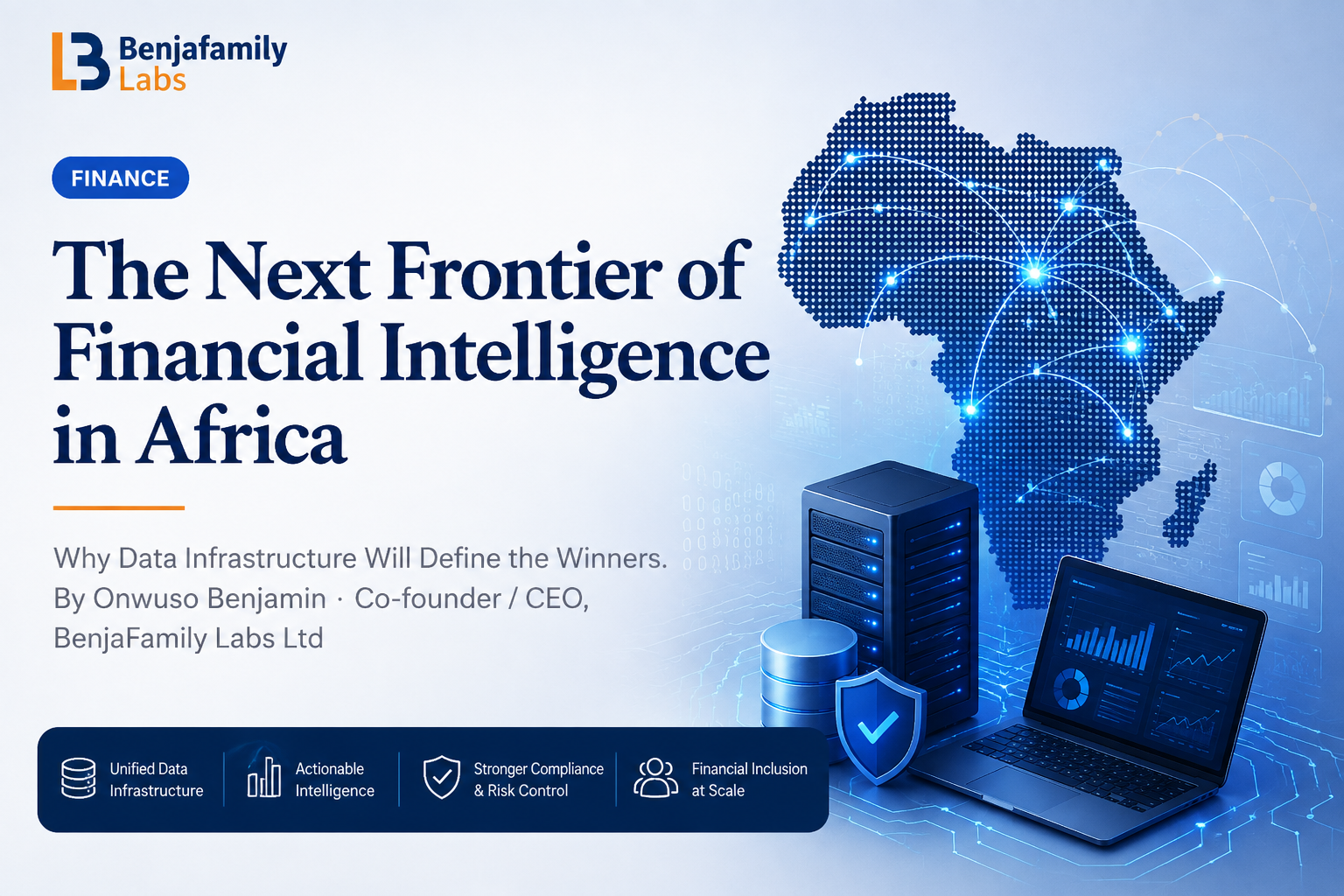
Across Africa, financial services have experienced extraordinary growth over the last decade. Fintechs, digital banks, microfinance institutions, crypto platforms, and payment companies have expanded access to financial services for millions of people previously excluded from the formal financial system.
Yet beneath this growth lies a critical challenge.
Financial institutions are generating more data than ever before, but many still struggle to transform that data into actionable intelligence.
Transaction records, customer onboarding information, compliance reports, risk assessments, fraud indicators, and external datasets often exist in separate systems. As a result, compliance teams, risk managers, and decision-makers are forced to work with fragmented information at a time when financial crime, regulatory scrutiny, and operational complexity are increasing.
"The next generation of financial institutions will not compete solely on products or customer acquisition. They will compete on intelligence."
The Rise of Financial Intelligence Infrastructure
Historically, financial institutions have invested heavily in customer-facing infrastructure such as payment gateways, mobile applications, digital onboarding systems, and customer support platforms.
The coming decade will require equal investment in intelligence infrastructure.
Financial intelligence infrastructure refers to the systems that collect, normalize, analyze, and transform financial data into meaningful insights that support decision-making.
These systems can help institutions answer critical questions:
- Is this customer exhibiting unusual behavior?
- Does this transaction pattern indicate elevated risk?
- Are there hidden relationships between entities that require further review?
- Which customers present the highest compliance burden?
- How can operational teams make faster and more informed decisions?
The institutions that can answer these questions efficiently will gain a significant competitive advantage.
Why Compliance and Risk Teams Need Better Tools
Regulatory expectations continue to evolve across global financial markets. Compliance and risk professionals are increasingly expected to identify suspicious activities, assess customer risk profiles, maintain audit trails, and demonstrate effective oversight.
However, many organizations still rely on manual workflows, spreadsheet-based analysis, and disconnected data sources. This creates several challenges:
|
As transaction volumes grow, these challenges become more difficult to manage using traditional methods. The future requires systems capable of transforming large volumes of financial data into intelligence that can be consumed by both humans and machines.
APIs Are Becoming the New Financial Infrastructure
One of the most important developments in modern financial services is the rise of APIs. APIs have already transformed payments, identity verification, and open banking.
The next evolution will be intelligence APIs.
Instead of merely moving data between systems, intelligence APIs will enrich, analyze, and contextualize financial information before it reaches decision-makers. This shift has profound implications.
"Rather than building complex analytical systems from scratch, institutions will increasingly consume intelligence as a service through specialized infrastructure providers."
This model reduces implementation complexity while accelerating access to actionable insights.
The African Opportunity
Africa presents a unique opportunity for innovation in financial intelligence. The continent's financial ecosystem includes traditional banks, microfinance institutions, digital lenders, fintech startups, payment processors, crypto platforms, and cross-border payment providers — each generating significant amounts of valuable financial data.
Yet there remains a substantial gap between data availability and intelligence accessibility.
Organizations that bridge this gap will play an important role in strengthening financial inclusion, improving risk management, reducing fraud, and supporting regulatory compliance across the ecosystem.
Building for the Future
The future of financial services will not be determined solely by who collects the most data. It will be determined by who can transform data into intelligence.
As financial ecosystems become increasingly interconnected, institutions will require infrastructure capable of providing deeper visibility into risk, compliance, customer behavior, and operational performance.
The winners of the next decade will be those that invest not only in financial products but also in the intelligence systems that power better decisions.
“Financial intelligence is no longer a back-office function. It is becoming a core component of modern financial infrastructure.”
And for Africa's rapidly evolving financial ecosystem, that transformation is only beginning.

Leave a comment
Your email address will not be published. Required fields are marked *